The Banbury Stamp Society opened its new season with a bumper turnout, including two prospective members visiting the society. John Walker gave a compelling display of prisoner-of-war mail from Far Eastern camps during the Second World War, combining rare postal material with stories that brought home the human cost of captivity.
John began with the surrender of British and Allied forces in Singapore. He explained that around one in three prisoners died through ill-treatment and appalling conditions. Many were transported on “hell ships” which, because the Japanese did not identify them as carrying prisoners of war, were sunk by Allied submarines. The Japanese authorities also used prisoners as forced labour across their expanding empire. No records were kept of where men from Changi Prison Camp were sent, so one prisoner, David Nelson, set about creating a record system. Nelson was Mentioned in Despatches for his work, though John felt he never received the wider recognition he deserved.
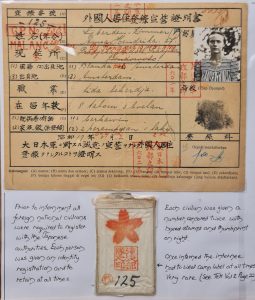
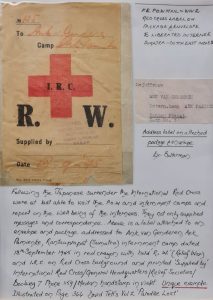
John showed five different cards produced for prisoners in Singapore and Malaya to send home. One was specifically for Indian prisoners of war, and only three examples are known; John had one of them. After liberation, the head of Cable & Wireless paid for free telegrams to be sent to prisoners’ families, letting them know their loved ones were alive. One especially poignant detail concerned the Sumatra death railway: it was completed on the day Japan surrendered, having cost thousands of prisoners’ lives, but was never put to its intended use. Sumatra had been part of the Dutch East Indies before the war, and many Dutch civilians, as well as soldiers, were taken prisoner.
The Thai–Burma railway, familiar to many through the heavily fictionalised film The Bridge on the River Kwai, was another focus. Japanese authorities recruited civilians with false promises of decent treatment, but they were subjected to slave-like conditions. Estimates of deaths vary widely: John cited figures of around 80,000, with some estimates reaching 250,000. He showed a postal item connected with one of the civilians involved. He also described the fate of Dutch people in the former Dutch East Indies, where some were murdered by local people after the war because of the deep resentment they faced. Some were placed in Changi for their protection, while other camps were named after members of the Dutch royal family.
In the Philippines, most prisoners of war were American. Much of their mail was carried by air or ship to neutral territory before being handed to the Americans. Many civilians were interned too: at first, those with the correct documentation could remain free, but later they were summoned by the Japanese authorities and ordered into captivity. In one camp, stamp dealers were allowed to continue their hobby, although the Kempeitai censored all material. John also explained that prisoners held in Saigon—now Ho Chi Minh City—were required to give false locations, such as China, because the Japanese did not want their presence there known.
Among the other striking items and stories were one concerning HMS Petrel and John’s favourite cover: the last item of mail sent by Eric Liddell, the missionary in China made famous by Chariots of Fire. John closed with a cover signed by a pilot of the Enola Gay, bringing the display to a powerful conclusion. It was a moving and memorable opening meeting, with the postal material giving a vivid record of an extraordinarily dark chapter in history.
The next meeting of the Banbury Stamp Society will be held on Tuesday, 20th October 2026, at 7:30pm at Jubilee Park Hall, Bloxham. The Banbury Stamp Society is on-line at
‘www.banburystampsociety.co.uk’, or contact John Davies on 01295 255831.